Thinking about trading snow for sunshine and moving to Boca Raton? You are not alone. Boca offers beach access, resort-level amenities, and a calmer pace than larger South Florida cities, which makes it popular with relocators. In this guide, you will learn how neighborhoods differ, what to expect with taxes and insurance, how condos and HOAs work, and exactly how to plan your move with confidence. Let’s dive in.
Boca Raton at a glance
Boca Raton is a mid-sized coastal city in Palm Beach County with a population of about 102,238. The city has a large retiree presence, with roughly 24.6% age 65 and older, and a highly educated population, with about 61.8% holding a bachelor’s degree or higher. Those traits shape the housing mix: waterfront estates and country-club living, a walkable downtown condo scene, and many planned communities in West Boca.
Housing prices vary widely by property type and source. Indexes like Zillow’s ZHVI and Redfin’s median sale price can look very different, especially when comparing coastal condos to inland single-family homes. When you review pricing, always note the data source and the date, then compare across multiple indicators.
Match neighborhoods to your lifestyle
Boca’s micro-markets suit very different needs. Use these profiles to narrow your search.
Waterfront and luxury enclaves
Who it fits: Boaters, luxury buyers, and anyone prioritizing proximity to the beach and private clubs.
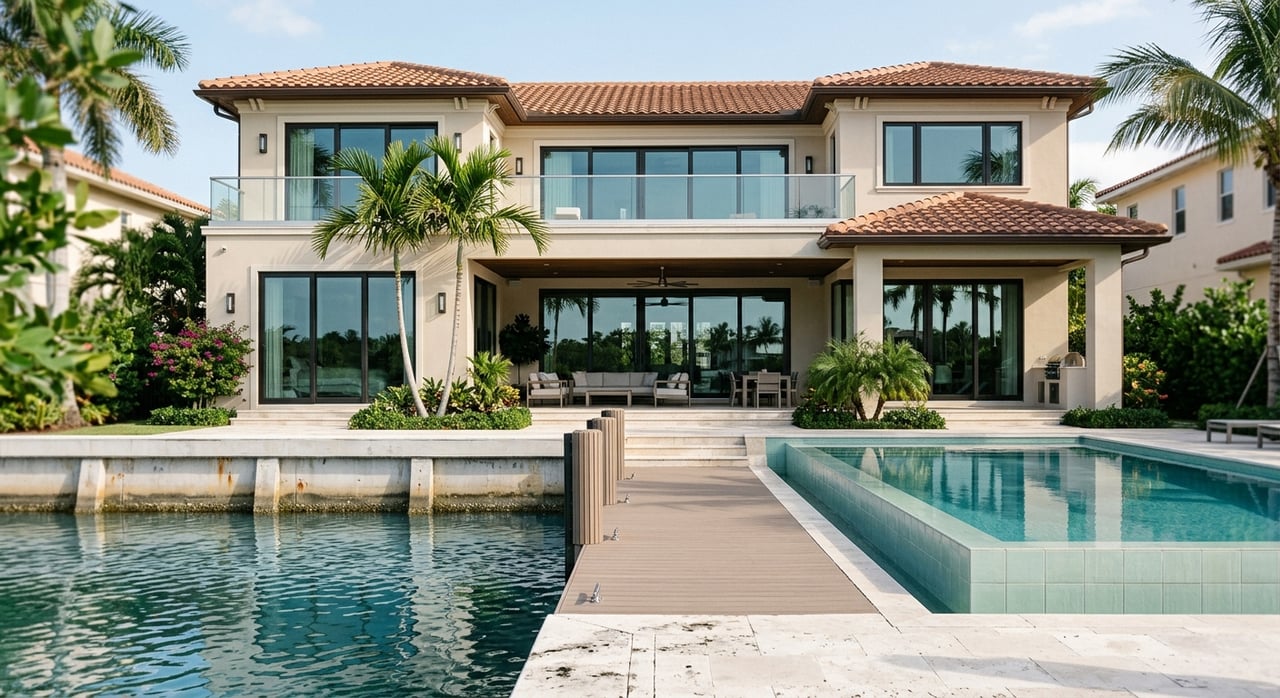
What you’ll find: Custom single-family estates, deepwater dockage on canals and the Intracoastal, and proximity to private clubs such as Royal Palm Yacht & Country Club, plus properties near The Boca Raton Resort & Club.
Anchors: Beach access, marina access, golf and club amenities.
Quick checks:
- Flood zone and FEMA map for insurance needs.
- HOA or club membership rules and fees.
- Commute routes to downtown Boca or I‑95.
Downtown and Mizner Park condos
Who it fits: Downsizers and buyers who want walkability and a lock-and-leave lifestyle.
What you’ll find: Mid-rise and luxury condos near Mizner Park and Town Center, dining and cultural options like the Boca Raton Museum, and easy access to parks.
Anchors: Walkable dining, shopping, cultural events.
Quick checks:
- Condo association budgets, reserves, and any recent assessments.
- Age of building, structural inspection history, and hurricane protections.
- Parking arrangements and pet or rental policies.
West Boca and planned communities
Who it fits: Families and active adults who want amenities and more space.
What you’ll find: Large country-club communities and newer subdivisions such as Boca West, Broken Sound Club, Boca Pointe, and Boca Del Mar. Options range from villas to single-family homes with pools.
Anchors: Golf, tennis, fitness, on-site dining, parks, and shopping.
Quick checks:
- Required club memberships or tiered dues.
- School zones within the School District of Palm Beach County.
- Drive times to I‑95, the Turnpike, and beaches.
Family-friendly inland neighborhoods
Who it fits: Value-focused buyers who prefer yard space and a suburban feel.
What you’ll find: Areas like Sandalfoot Cove and parts of West Boca with a mix of single-family homes and townhomes, plus access to parks and everyday shopping.
Anchors: Parks, fields, and family amenities.
Quick checks:
- HOA rules and fees, if any.
- Proximity to schools and after-school activities.
- Roof age, impact glass, and wind-mitigation features to help with insurance.
55-plus and active-adult options
Who it fits: Downsizers and retirees who want low-maintenance living and robust programming.
What you’ll find: Age-restricted communities such as Century Village (Boca Raton) and Whisper Walk. Expect condo or villa layouts, community pools, clubs, and shuttle services.
Anchors: On-site events, fitness, and social groups.
Quick checks:
- Association budgets, reserves, and special-assessment history.
- Transportation options for medical visits and shopping.
- Rental restrictions and guest policies.
Condos and waterfront towers
Who it fits: Buyers who want views, amenities, and lower maintenance than a single-family home.
What you’ll find: Intracoastal and ocean-adjacent towers in east Boca and town-center condos. Unit age, building reserves, and storm protections vary widely.
Anchors: Views, fitness centers, pools, concierge services in some buildings.
Quick checks:
- HOA fees and what they include, especially wind and flood impacts.
- Structural inspection history and reserve studies.
- Flood zone status and lender requirements.
Costs to understand: taxes, insurance, fees
A smart relocation plan starts with a clear view of carrying costs and closing fees.
Property taxes and homestead rules
- Florida property taxes are set by local taxing authorities and applied to a property’s assessed value. Palm Beach County’s effective tax rate often falls around 0.8 to 1.0 percent of assessed value. For an address-specific estimate, use the Palm Beach County Property Appraiser’s tax estimator.
- If you make the home your primary residence, the homestead exemption reduces taxable value and triggers the Save Our Homes assessment cap. The cap limits annual assessed-value increases to the lower of 3% or CPI. Review Save Our Homes cap guidance and confirm the filing deadline with the county appraiser.
Documentary stamps and closing costs
- Florida levies documentary stamp tax on deeds, often calculated at about $0.70 per $100 of consideration, and a documentary stamp plus intangible tax on promissory notes, often $0.35 per $100. Practices can vary by county and are subject to change. For details, see the state’s documentary stamp taxes overview and confirm with your title company.
Homeowners and flood insurance basics
- Homeowners insurance and flood insurance are separate. Florida’s market is evolving, and premiums vary by address and building characteristics. The Florida Office of Insurance Regulation reported a statewide admitted-market average homeowners premium around $3,815, with South Florida often higher. Get quotes early and ask how roof age, impact windows, and wind mitigation affect pricing.
- Flood insurance is required by many lenders if the property is in a Special Flood Hazard Area. Check your property on the FEMA Flood Map Service Center and request both NFIP and private flood quotes when available.
- Citizens Property Insurance is Florida’s residual market option. Ask your insurance agent which private carriers are quoting for your address and whether any takeout changes could affect your policy.
HOA, condo reserves, and special assessments
- Many Boca communities have monthly HOA or club dues. Condos and older buildings may face special assessments for repair or structural work. Always review the resale certificate, reserve study, meeting minutes, budgets, and any planned projects before you finalize your offer.
Lifestyle and getting around
Boca balances resort amenities with a quieter pace than Miami or Fort Lauderdale. You will find Mizner Park’s dining and the Boca Raton Museum anchoring a compact, walkable downtown. Country-club communities offer full programming, while the beaches and Intracoastal define the city’s outdoor lifestyle.
Transit options help you move around South Florida without driving every trip:
- Tri‑Rail serves Boca at the Yamato Road stop. Check schedules and airport connections via the Tri‑Rail Boca Raton station.
- Brightline opened its downtown Boca station in late 2022, adding fast service to West Palm Beach, Fort Lauderdale, Miami, and Orlando. Explore routes at Brightline’s Boca Raton station.
- For flights, most travelers use Palm Beach International or Fort Lauderdale-Hollywood, with Miami International further south.
When to shop and when to move
- Seasonality: Inventory and buyer activity often rise from October through April during the winter and snowbird months. Visiting in season helps you feel the city’s peak rhythm.
- Hurricane season: June 1 to November 30. If possible, avoid scheduling a move during the heart of the season. If you do, build in contingency time.
- Closing timelines: Many financed deals take 30 to 60 days. Title companies can give a more precise range based on your contract and financing.
Ready-mover checklist
Use this step-by-step list to move from idea to keys in hand.
Get fully pre-approved with a lender experienced in Florida underwriting and wind or flood exposures.
Clarify your top priorities: beach or boating, country-club amenities, walkability, specific school zones, or a low-maintenance condo budget.
Shortlist neighborhoods and request Matterport or 3D tours plus live video walkthroughs. Ask for roof and A/C ages, wind-mitigation reports, and details on impact glass or shutters.
Get insurance quotes early for homeowners and separate flood coverage. If the property is in a mapped flood zone and you have a lender, confirm flood requirements.
Order title research and request HOA or condo documents up front. Review bylaws, reserve studies, meeting minutes, budgets, and any special assessments.
Plan an in-person visit when you can. If you want to feel peak season, visit October through April. If you prefer less crowding, consider late spring.
Confirm a closing-cost estimate with a local title company, including documentary stamps, recording fees, prorated taxes, and HOA estoppels.
If you will homestead, plan your residency steps after closing: driver’s license, voter registration, utilities, and filing the homestead exemption with the county appraiser by the statutory deadline.
Quick picks by buyer type
Downsizers and empty nesters: Downtown or Mizner Park condos, waterfront towers near the resort, and 55-plus options like Century Village or Whisper Walk. Do three checks: flood zone, HOA reserves, and rental rules.
Families: Boca Pointe, Boca Del Mar, Sandalfoot Cove, and West Boca communities with parks and amenities. Do three checks: school zone, HOA fees, and commuting routes.
Country-club lifestyle: Royal Palm Yacht & Country Club, Boca West, and Broken Sound Club for golf, tennis, and robust social calendars. Do three checks: membership obligations, flood zone, and club capital requirements.
Work with a trusted local advisor
Relocating from out of state is easier when you have a responsive, detail-focused partner on the ground. If you are comparing Boca Raton with nearby Broward options or need help coordinating tours, insurance quotes, and HOA due diligence, connect with a concierge-level agent who understands South Florida living. Start your plan with Lois Rutigliano and get step-by-step support from the first video tour to closing day.
FAQs
How are Boca Raton property taxes calculated for newcomers?
- Local taxing authorities apply millage rates to a property’s assessed value. Use the Palm Beach County Property Appraiser’s tax estimator for address-specific projections and factor in homestead and Save Our Homes if you will be a primary resident.
Do Boca Raton buyers need flood insurance near the Intracoastal?
- If a lender is federally regulated and the home is in a Special Flood Hazard Area, flood insurance is required. Check the property on the FEMA Flood Map Service Center and discuss NFIP and private flood options with your agent.
Who pays documentary stamp taxes in Palm Beach County sales?
- Florida custom often has the seller pay the documentary stamp on the deed and the buyer pay mortgage-related stamps, but it can be negotiated. Review the state’s documentary stamp taxes and confirm on your closing statement.
What should out-of-state buyers know about Florida homeowners insurance?
- Premiums vary by address and structure. The Florida Office of Insurance Regulation reports statewide averages, but South Florida is often higher. Get quotes early and ask about wind mitigation, roof age, and impact glass.
When is the best season to house-hunt in Boca Raton?
- Many buyers shop October through April when seasonal inventory is higher and community activity is in full swing. Try to avoid a move during peak hurricane season if you can, which runs June 1 to November 30.